Physicist & AI researcherCurrently at Matter42

Ali
Al Kadhim.

Particle physics. Materials science. AI.

Scientific machine learning, simulation,
and inference. Previously CERN / CMS.

Current work

Materials science & AI

matter42.com

At Matter42, I work on scientific AI, literature pipelines, and simulation for advanced materials. My research includes Raman and defect inference for two-dimensional materials, alongside the tools below.

Scientific knowledge

Literature,
connected.

Scientific papers become structured evidence: materials, methods, measurements, and figures connected in an explorable research space.

StructuredLinkedFigure digitizationScientific mapping
Explore the literature database
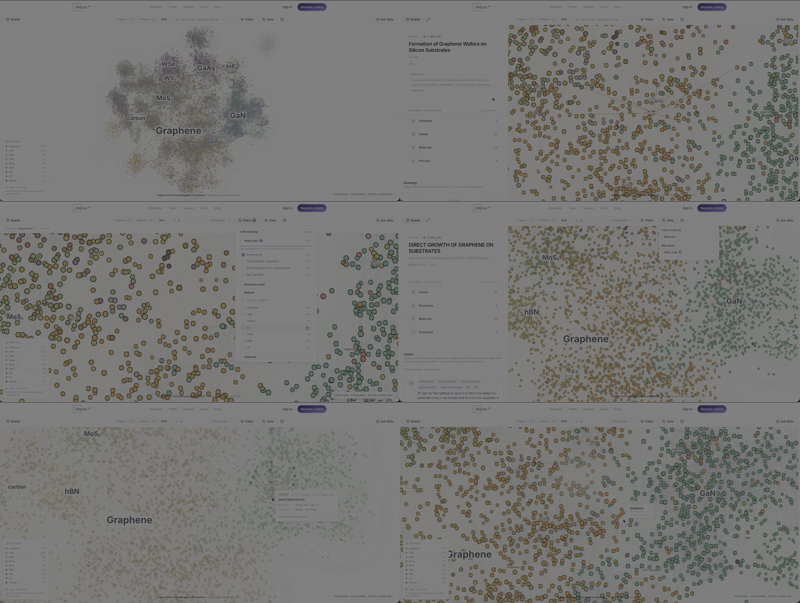
Matter42 literature map grouping papers around materials including graphene, MoS₂, WS₂, and GaN
paper · material · measurement
figures + context + provenance
Simulation

Kinetic Monte Carlo

Surface growth on a lattice. Deposition, diffusion, nucleation, and coalescence, one event at a time.

Growth kinetics2D materialsDefects
Growing domainsMobile atomsVacancies
Data & method

This looping illustration uses seeded, neighbor-dependent lattice growth and depicts nucleation, domain boundaries, mobile atoms, and vacancies. It is not a calibrated materials simulation. Matter42 reference.

Characterization

Spectroscopy & microscopy

  • X-ray photoelectron spectroscopy
  • Raman spectroscopy
  • Atomic force microscopy

Chemical states, vibrational modes, and surface topography. Physics-grounded analysis of materials.

Core levelsDefect inferenceSurface structure
Data & method

The animated XPS example uses analytic peaks to demonstrate component separation and is not a measured fit. Peak energies remain fixed while a scanning marker and component intensities animate. Matter42 XPS work.

Scientific software

Local scientific agents.

Scientific workflows on a workstation: local models, retrieval, and tools. Built around the data and computing environment of the lab.

Air-gappedLocal inferenceScientific toolsTraceable outputs
Matter42 deployment options
LOCAL WORKSTATION
Model
LiteratureSimulationSpectra
Sources · Parameters · Results
Previous research · 2020–2025

CERN / CMS

Particle physics, with a focus on jets, QCD, statistical inference, and machine learning.

My work included jet emulation, non-perturbative corrections for inclusive jets, L1 / ECAL prefiring studies, and HGCAL silicon-sensor testing and database workflows.

Jets & QCDUncertaintySimulationDetector data
Publication record on INSPIRE
Data & method

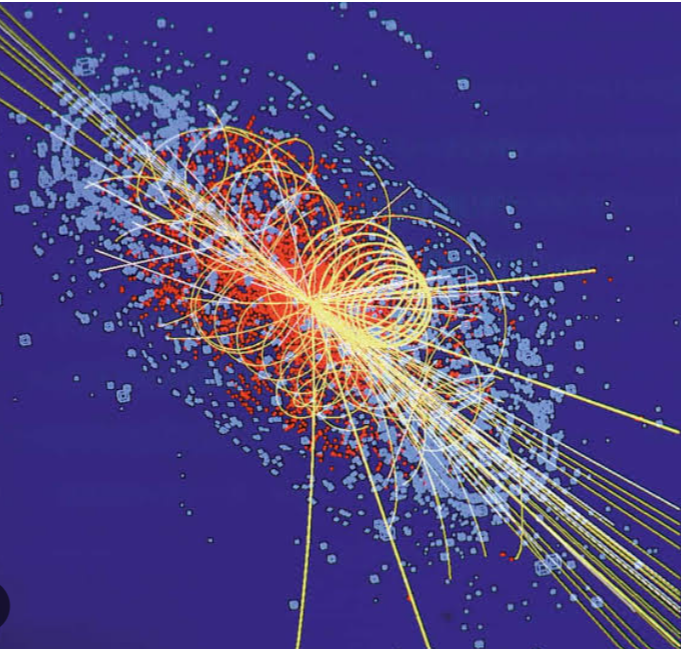
Animated event-display artwork inspired by the supplied collision snapshot. Tracks and detector hits are illustrative. View the supplied reference · CMS event displays.

Papers & code

SELECTED PUBLICATIONS

Background

Research & education

Matter42

Machine Learning Engineer & Researcher
Scientific AI, literature infrastructure, simulation, and materials characterization.

CERN / CMS Collaboration

Member & co-author
Jets, QCD, machine learning, detector corrections, and HGCAL.

Florida State University

Ph.D. in Particle Physics · M.S. in Physics
Advisor: Harrison B. Prosper. Research and teaching.

Fermilab

Research Fellow · Bayesian optimization for event-generator tuning.

DESY

Research Affiliate · Non-perturbative corrections for inclusive jets.

University of Nebraska at Omaha

B.S. Physics · B.A. Mathematics
Computational nanostructures, 2D materials, and teaching. Summer research at UNL in 2017.